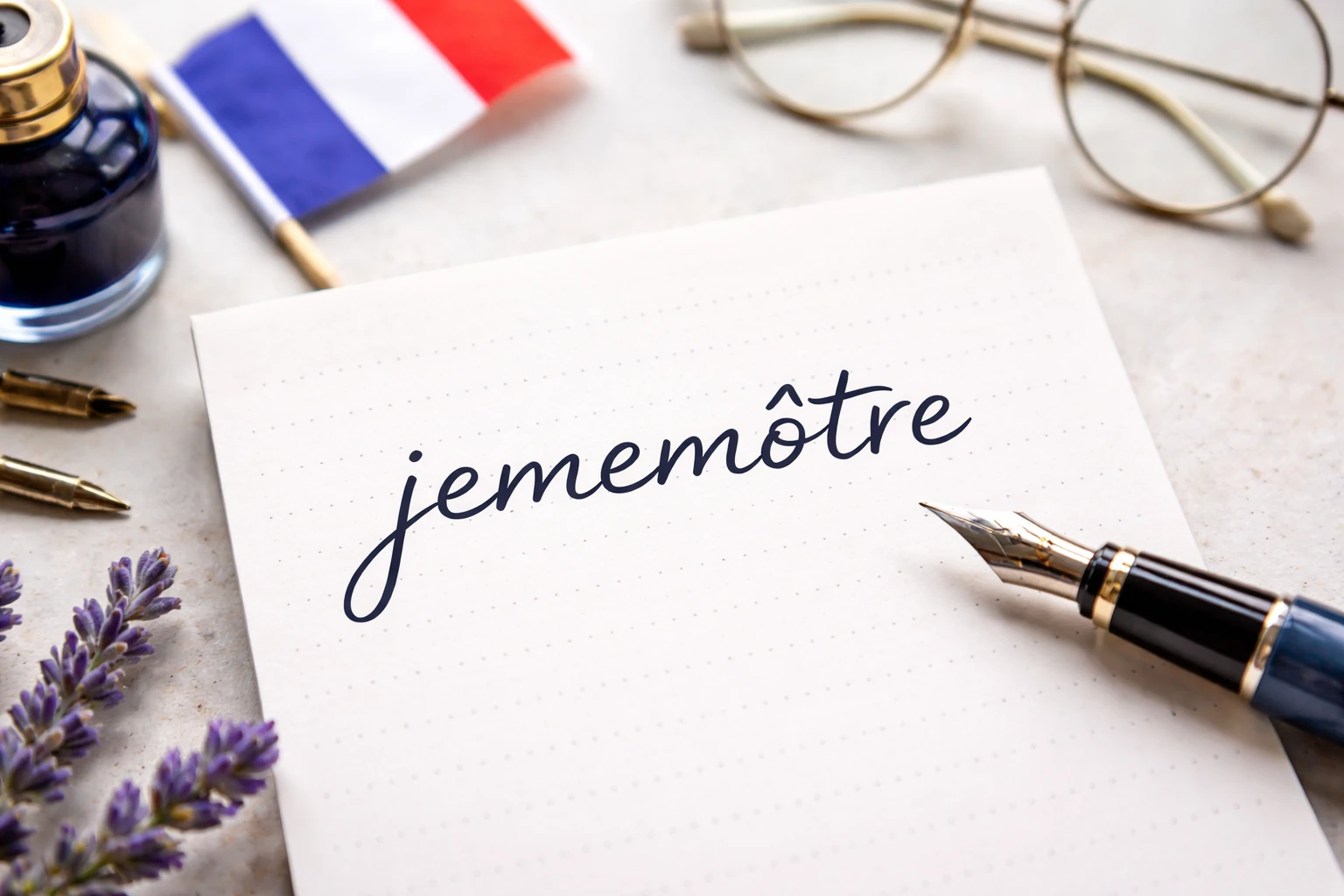
Search for “jememôtre,” and you’ll find yourself in a strange corner of the internet. Dozens of articles promise insight. They talk about identity, memory, self-expression, even philosophy. But read closely, and a pattern emerges: the explanations sound similar, the claims loop back on themselves, and clear sources are hard to find.
So what is jememôtre? A real word? A French concept? Or something else entirely?
The answer isn’t as straightforward as many of those pages suggest. And that’s exactly what makes this keyword worth unpacking.
What Is Jememôtre?
At its simplest, jememôtre appears to be a coined or stylized term, not an established word in English or French. Most explanations online link it to the French phrase je me montre, which translates roughly to “I show myself” or “I present myself.”
That connection makes sense on the surface. The structure lines up, and the idea of self-presentation fits the way the term is often described. But here’s the thing: jememôtre itself does not appear in standard French dictionaries or recognized linguistic references.
What you’re seeing, then, is not a traditional word with a documented history. It’s closer to a constructed expression—something that borrows from real language but takes on a new life online.
And that distinction matters.
Is Jememôtre a Real French Word?
Short answer: no, not in any formal sense.
French dictionaries such as those published by the Académie française or Larousse catalog words with established usage. Je me montre—the phrase—is valid French. It follows normal grammar and appears in everyday speech. But the merged form jememôtre, with its stylized spelling and accent, does not show up in those references.
That doesn’t mean the term is meaningless. Language changes all the time, and new words emerge constantly. But it does mean that calling jememôtre a “French word” is misleading. It’s better understood as a creative adaptation of French elements, not part of the language itself.
This is where many online explanations start to blur the line. They treat the phrase and the coined term as interchangeable, which creates an illusion of legitimacy that isn’t quite there.
The Phrase Behind It: “Je Me Montre”
To understand why jememôtre feels plausible, you need to look at the phrase it likely comes from.
Je me montre is a reflexive construction. In plain English, it can mean “I show myself,” “I reveal myself,” or “I present myself.” Depending on context, it might suggest visibility, openness, or self-display.
That range of meaning is part of the appeal. It leaves room for interpretation. It can be about confidence, vulnerability, or simply being seen.
So when people package that idea into a single stylized word—jememôtre—they’re compressing a familiar concept into something that feels new, even if the underlying meaning isn’t.
Why Is Jememôtre Suddenly Appearing Online?
Here’s where the story gets more interesting.
Most references to jememôtre appear in recent online articles, many published within a short time frame. They often describe the term in broad, abstract language—linking it to identity, memory, self-awareness, or digital expression. But they rarely cite clear origins, academic sources, or real-world usage outside those same articles.
That pattern suggests something important: the term may be spreading not because it has deep roots, but because it’s being amplified through repetition.
In other words, one article introduces the idea. Others pick it up. Each new piece reinforces the impression that the term is established. Over time, the repetition creates its own credibility.
This isn’t unusual. The internet has a long history of turning loosely defined concepts into widely searched keywords. A phrase doesn’t need a long lineage to gain traction. It just needs to sound meaningful and be easy to reuse.
How the Meaning Keeps Expanding
If you read enough explanations of jememôtre, you’ll notice that its meaning shifts depending on the writer.
Some frame it as a concept about self-expression—how people present themselves in public or online. Others lean toward memory and identity, suggesting it reflects how individuals understand themselves over time. Still others treat it almost like a philosophical idea about being seen versus seeing oneself.
But here’s the catch: these interpretations don’t come from a shared source. They’re built on top of each other, often without independent verification.
That’s why the term feels flexible. It doesn’t have a fixed definition, so it can absorb different meanings depending on context. For readers, that flexibility can be appealing. For writers, it creates room to shape the idea into something that fits their narrative.
The Appeal of a Word Like Jememôtre
So why does a term like this catch on at all?
Part of the answer lies in how it sounds. Jememôtre has a certain rhythm. It feels foreign enough to be intriguing but familiar enough to seem understandable. The accent gives it a hint of sophistication, even if the construction isn’t standard.
There’s also the subject matter. Ideas about identity, visibility, and self-expression resonate strongly online. Social media platforms are built around the act of showing oneself—curating images, sharing thoughts, shaping a public version of who you are.
A word that seems to capture that idea, even loosely, has a built-in audience.
And then there’s the simplicity. A single term can act as a shortcut for a broader concept. It’s easier to package and repeat than a full explanation.
Is Jememôtre Being Used in Real Life?
Outside of blog posts and SEO-driven content, there’s little evidence that jememôtre has entered everyday language.
You’re unlikely to hear it in conversation, see it in literature, or find it in academic writing. That doesn’t mean it never will. Some words start exactly this way—appearing in niche contexts before gaining wider use.
But right now, its presence seems largely confined to online explanations that reference each other. That’s an important distinction for anyone trying to understand how established the term really is.
A Closer Look at How Online Terms Spread
The rise of jememôtre fits into a broader pattern of how language evolves on the internet.
A phrase appears, often loosely defined. Early content frames it as meaningful or insightful. Other creators pick it up, sometimes rephrasing the same explanation. Search engines begin to surface those pages together, which reinforces the perception that the term has substance.
From the reader’s perspective, it looks like a trend. From a distance, it can look like consensus.
But here’s the thing: repetition isn’t the same as evidence. A term can feel established simply because it’s been written about many times, even if those writings all trace back to the same thin foundation.
This doesn’t mean the term is useless. It just means its meaning is being shaped in real time, rather than inherited from a clear origin.
Should You Take Jememôtre Seriously?
That depends on what you’re looking for.
If you’re expecting a defined concept with a documented history, you’re likely to be disappointed. The available evidence doesn’t support that kind of structure.
But if you see it as a cultural artifact—a word that reflects how people talk about identity and self-presentation online—it becomes more interesting.
In that sense, jememôtre isn’t important because of what it definitively means. It’s important because of what it reveals about how language is created, shared, and reshaped in digital spaces.
Frequently Asked Questions
What does jememôtre mean?
Most explanations link jememôtre to the French phrase je me montre, meaning “I show myself” or “I present myself.” However, the term itself does not have a fixed or widely accepted definition and is best understood as a stylized or invented expression.
Is jememôtre a real French word?
No, it does not appear in standard French dictionaries or linguistic references. While it draws from real French words, the combined form is not recognized as part of the language.
Where did jememôtre come from?
There is no clear origin tied to a specific author, publication, or event. The term seems to have emerged online and spread through repeated use in blog posts and content pieces.
How do you pronounce jememôtre?
If pronounced in a French-influenced way, it would sound similar to “zhuh-muh-mohnt-r,” though variations are likely since the word is not standardized.
Why is jememôtre showing up in search results?
The term has gained visibility because multiple websites have published content about it, often using similar explanations. This repetition increases its presence in search rankings.
Is jememôtre used in everyday conversation?
There is little evidence that it is widely used outside of online articles. It has not yet entered common spoken language or mainstream writing.
Read aslo: Nimesh Patel Wife: A Closer Look at the Private Life Behind the Comedian
Conclusion
Jememôtre sits in an unusual place. It looks like a word, sounds like it could belong to a language, and carries a meaning that feels familiar. But when you look for solid ground—dictionary entries, historical usage, clear origin—you come up short.
That doesn’t make it meaningless. It makes it a snapshot of how language behaves online. Words can appear, spread, and take on weight long before they earn formal recognition. Sometimes they fade. Sometimes they stick.
What matters is how they’re used and why they resonate. In the case of jememôtre, the appeal seems tied to something simple: the idea of showing oneself, of being seen, of shaping identity in public spaces. That idea isn’t new. The packaging is.
So if you encounter the term again, you’ll know what you’re looking at. Not a hidden linguistic gem, but a word in the making—or perhaps a word that exists mainly because people keep writing about it.
Either way, it tells you something real about the internet, even if the word itself is still finding its footing.