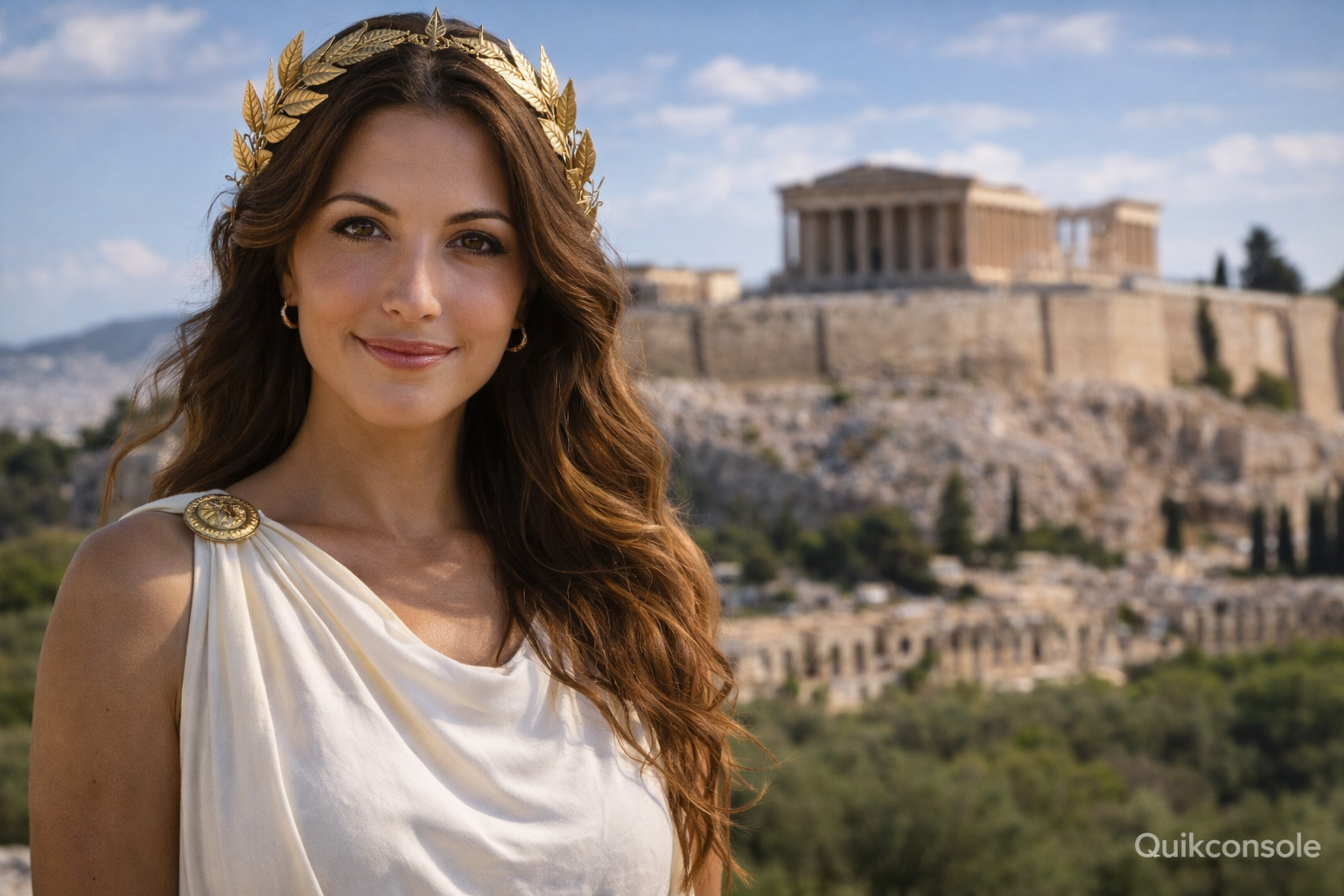
To speak about Greek women is not simply to describe a group of people. It is to tell a story that stretches across thousands of years, shaped by mythology, survival, tradition, and transformation. Greek women are not defined by one role or one identity. Instead, they exist at the intersection of past and present, carrying echoes of ancient civilizations while navigating the demands of modern life.
This is not just a cultural observation. It is a living biography. Greek women have been daughters of history, guardians of family, participants in struggle, and architects of change. Their story unfolds slowly, often quietly, but always with depth.
Ancient Roots: Women in the Foundations of Greek Civilization
The earliest chapters of Greek women’s story begin in ancient times, where mythology and reality often blend. Figures like Athena, the goddess of wisdom, and Hera, the queen of the gods, reflect a symbolic power that women held in imagination. Yet real women lived very different lives.
In classical Athens, women were largely confined to the home. Their world revolved around family duties, child-rearing, and maintaining the household. Public life was dominated by men. Still, this was not the whole picture. In Sparta, women experienced a different reality. They trained physically, managed property, and had more autonomy than their Athenian counterparts.
These contrasts show an important truth. Even in ancient Greece, there was no single identity for women. Their lives were shaped by region, class, and circumstance. This diversity would continue throughout history.
Between Tradition and Change: The Ottoman Era and Early Modern Greece
As centuries passed and Greece came under Ottoman rule, the lives of women became more tightly connected to family and community structures. Women were central to preserving Greek identity during this period. They kept language, religion, and traditions alive within the home.
While their public roles remained limited, their influence within the private sphere grew stronger. Mothers became educators. Grandmothers became storytellers. In many ways, Greek culture survived through women’s daily practices.
After independence in the 19th century, Greece began to modernize slowly. Yet progress for women came in small steps. Education became more accessible, but expectations around marriage and motherhood remained dominant.
The Turning Point: Rights, Education, and Visibility
The 20th century marked a turning point. Greek women gained the right to vote in 1952, opening the door to political participation. Education expanded rapidly, and more women entered universities and professional fields.
This period also saw women stepping into the workforce in greater numbers. Teachers, nurses, and office workers became more common roles. Over time, lawyers, academics, and entrepreneurs followed.
However, change was not immediate or uniform. Many women still balanced traditional expectations with new opportunities. They worked outside the home, but they were still expected to manage household responsibilities. This dual role became a defining feature of modern Greek womanhood.
The Modern Greek Woman: Education Meets Reality
Today, Greek women are among the most educated in Europe. Many pursue higher education and specialized careers. Universities are filled with female students who aim for independence and professional success.
Yet the transition from education to career is not always smooth. Social expectations remain deeply rooted. Family responsibilities often fall on women, even when they are working full time. As a result, many women face difficult choices between career growth and personal life.
Despite these challenges, Greek women continue to push forward. They are increasingly visible in business, science, media, and public life. Their presence is growing, even if equality has not yet been fully achieved.
Family, Identity, and Emotional Strength
Family plays a central role in the identity of Greek women. It is both a source of strength and a source of responsibility. Relationships are often close-knit, with strong bonds between generations.
Women are typically seen as the emotional anchors of the family. They manage relationships, support relatives, and maintain traditions. This role is deeply valued in Greek culture, but it also carries weight.
Balancing personal ambition with family expectations can be challenging. Many women navigate this balance with resilience, finding ways to honor tradition while building their own paths.
Work and Ambition: Breaking Old Patterns
In recent decades, Greek women have made significant progress in the workplace. They are starting businesses, leading organizations, and contributing to innovation.
However, structural barriers still exist. Opportunities are not always equal, and leadership positions remain limited. Women often need to prove themselves repeatedly in environments that were not designed with them in mind.
Even so, change is visible. Younger generations are more confident in pursuing careers and redefining success. They are less willing to accept limitations and more determined to shape their own futures.
Voices of Change: Women in Society and Public Life
Greek women are also becoming more active in social and political discussions. Issues such as gender equality, domestic violence, and representation are gaining attention.
Women are speaking out, organizing, and influencing policy. Their voices are shaping conversations about the future of Greece. This shift is important because it moves women from the margins to the center of decision-making.
At the same time, cultural change takes time. Deep-rooted beliefs do not disappear overnight. Progress often happens gradually, through persistence rather than sudden transformation.
A New Generation: Redefining What It Means to Be Greek
The younger generation of Greek women is redefining identity. They are connected to global ideas while staying rooted in local culture. They travel, study abroad, and engage with international communities.
This exposure brings new perspectives. It challenges traditional roles and opens new possibilities. Young women are more likely to question expectations and create their own definitions of success.
Yet they do not abandon their heritage. Instead, they reinterpret it. They find ways to honor tradition while embracing change. This balance is shaping the future of Greek society.
Read Also: Kez Cary: A Quiet Life Behind the Spotlight
Conclusion
The story of Greek women is not a single narrative. It is a collection of lives, experiences, and transformations. From ancient times to the present day, Greek women have carried the weight of tradition while steadily pushing toward change.
They have been caregivers, educators, professionals, and leaders. They have preserved culture and challenged it. They have adapted to shifting realities while holding on to a strong sense of identity.
Today, Greek women stand at a unique point in history. They are more educated and more visible than ever before. Yet they continue to navigate challenges that reflect both the past and the present.
Their story is still unfolding. It is a story of resilience, ambition, and quiet strength. And above all, it is a reminder that progress is not just about change, but about the courage to redefine what is possible.