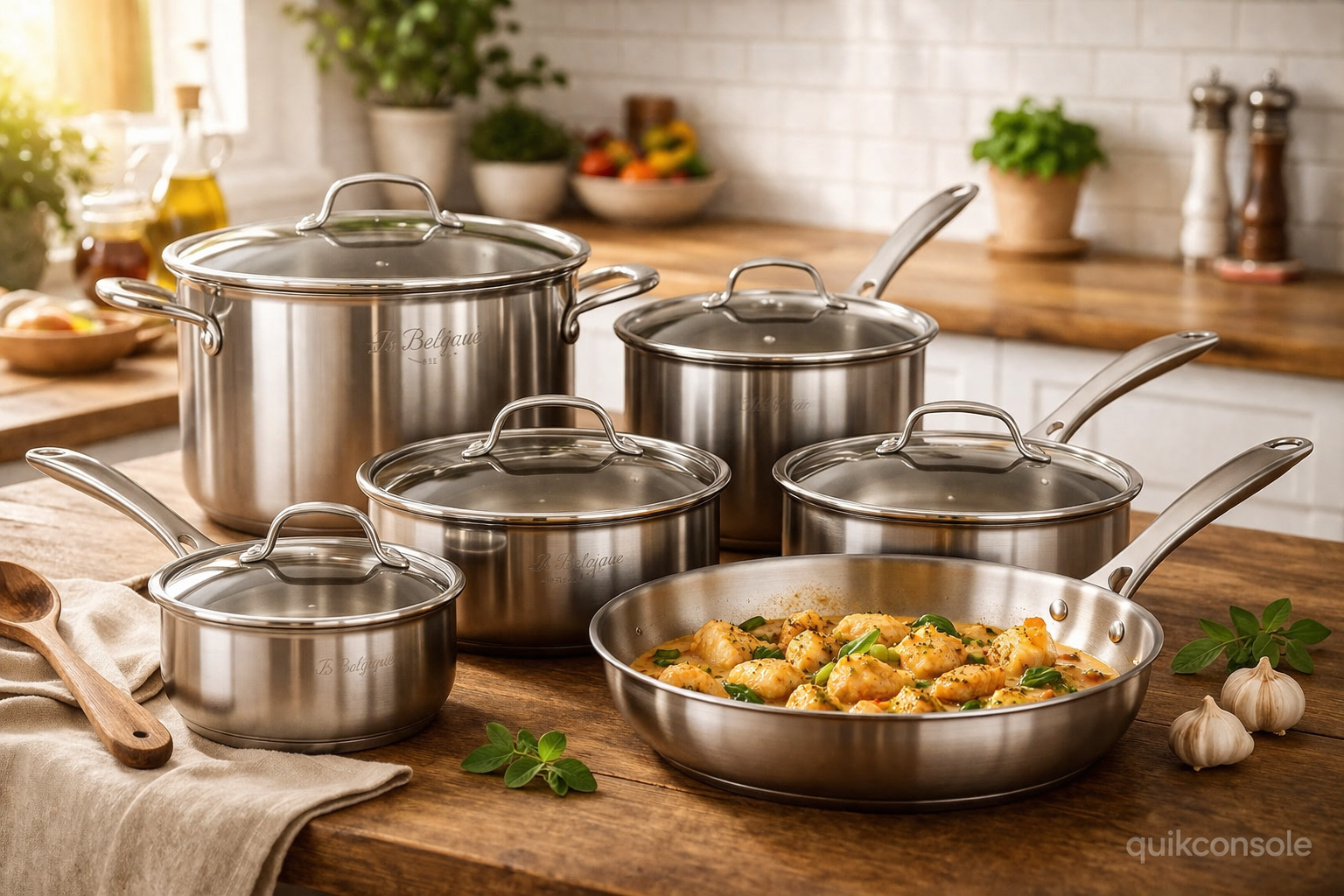
For many home cooks, cookware is more than a kitchen tool. It carries memories of family dinners, holiday meals, and the everyday rhythm of life. Belgique cookware, once a familiar presence in department stores, especially at Macy’s, built that kind of quiet relationship with thousands of households. So when shoppers begin asking, “Is Belgique cookware discontinued?”, the question is not just about availability. It’s about continuity, trust, and whether a reliable name has slipped away unnoticed.
The answer, however, is not as simple as yes or no. Belgique cookware has not entirely disappeared, but it has undeniably become harder to find. Its story today is less about a dramatic exit and more about a gradual retreat from the spotlight.
The Rise of Belgique Cookware
To understand where Belgique stands today, it helps to look at where it began. Belgique was never positioned as a luxury cookware brand. Instead, it occupied a comfortable middle ground. It offered solid, dependable pots and pans at prices that felt accessible to everyday consumers.
Much of its identity was tied to Macy’s, where it was marketed as a house or exclusive brand. This gave Belgique a strong retail anchor. For years, shoppers could walk into a Macy’s store and find neatly arranged Belgique cookware sets that promised practicality without overwhelming the budget.
Its appeal was straightforward. Stainless steel sets, copper-bottom pans, and nonstick options were designed for daily cooking. They were not marketed as heirloom pieces, but they were reliable enough to become long-term companions in the kitchen.
Why People Think Belgique Is Discontinued
Over time, something changed. Customers who once saw Belgique everywhere began noticing gaps. Certain sets disappeared. Replacement pieces became difficult to locate. Online listings started showing items as unavailable.
This shift created a sense of absence. When a brand becomes inconsistent in its visibility, it often feels like it has been discontinued, even if that is not entirely true.
One key reason behind this perception is how retailer-exclusive brands operate. Unlike independent cookware companies, Belgique depends heavily on Macy’s merchandising strategy. If Macy’s reduces shelf space, updates its product mix, or shifts focus to other brands, Belgique naturally becomes less visible.
Another factor is the lifecycle of cookware collections. Retailers frequently rotate inventory. Older designs are phased out to make room for newer ones. For customers trying to replace a specific pan from a set purchased years ago, this feels like discontinuation.
The Current Reality in 2026
Today, Belgique cookware exists in a somewhat in-between state. It is still present, but not consistently so. Some items remain available, particularly certain stainless steel sets and basic cookware pieces. At the same time, other lines appear to have been retired or are temporarily unavailable.
This uneven presence creates confusion. A shopper may find one Belgique product in stock while another, very similar item, is no longer available. The result is a fragmented brand experience.
In practical terms, Belgique is best described as a brand that is still alive but no longer fully supported in the way it once was. It continues to surface in select listings, yet it does not dominate store displays or online searches as it once did.
The Nature of Private Label Brands
Belgique’s story reflects a broader truth about private label cookware brands. These brands are closely tied to the retailers that carry them. Their success depends not only on consumer demand but also on internal business decisions.
When a retailer chooses to emphasize other cookware lines, whether premium brands or trending alternatives, private labels often take a step back. This does not mean they are discontinued overnight. Instead, they fade gradually, becoming less central to the retailer’s identity.
This pattern is common across the industry. Many department store brands experience periods of strong visibility followed by quieter phases where only select items remain in circulation.
Quality, Value, and Consumer Expectations
Belgique cookware has always been associated with value. It offered a balance between affordability and functionality. For many households, this made it an appealing choice.
However, consumer expectations have evolved. Today’s cookware market is more competitive than ever. Shoppers are increasingly focused on durability, advanced materials, and long-term performance.
At the same time, the rise of online reviews has made quality differences more visible. Some Belgique products have received praise for ease of use and design, while others have faced criticism for wear over time. This mixed reputation may have contributed to the brand’s quieter presence.
A Changing Cookware Market
The cookware industry itself has undergone significant transformation. Demand continues to grow, driven by home cooking trends, health-conscious consumers, and the expansion of e-commerce.
Modern buyers are more informed. They compare materials, read detailed reviews, and look for products that align with their cooking habits. Stainless steel, cast iron, and high-performance nonstick options all compete for attention.
In this environment, brands must continually evolve. Those that fail to innovate or maintain consistent availability risk losing relevance. Belgique’s current position reflects this broader shift.
What This Means for Current Owners
If you already own Belgique cookware, the situation is not alarming. Your pots and pans remain just as functional as they were when you purchased them. The question is more about future support.
Finding exact replacements may become more difficult over time. Matching a lid or replacing a single pan from an older set could require extra effort. However, this does not mean your cookware has lost its value.
In many cases, it may be more practical to replace individual pieces with similar items from other brands rather than trying to recreate an exact set.
Should You Still Buy Belgique Cookware?
For shoppers considering Belgique today, the decision depends on priorities. If you come across a set that meets your needs and budget, it can still serve as a reliable option for everyday cooking.
However, if long-term availability and consistency are important to you, it may be worth exploring brands with a more stable presence in the market. The ability to replace or expand your cookware over time can be an important factor in overall satisfaction.
The Emotional Side of a Disappearing Brand
There is also an emotional dimension to this story. Cookware brands often become part of a household’s identity. A familiar name on the bottom of a pan can carry years of memories.
When that name becomes harder to find, it can feel like losing a small piece of continuity. This is why questions about discontinuation resonate so strongly with consumers.
Belgique’s gradual fade is not unusual, but it does highlight how deeply everyday products can be woven into our lives.
Read Also: Lora Chaffins: A Quiet Life Beyond the Spotlight
Conclusion
So, is Belgique cookware discontinued? Not entirely. The brand still exists, but it no longer holds the same consistent presence it once did. Some products remain available, while others have quietly disappeared from shelves.
In many ways, Belgique’s story is a reflection of the modern retail landscape. Brands tied to specific retailers can rise quickly and fade just as quietly, shaped by shifting strategies and changing consumer expectations.
For shoppers and longtime users alike, the key is to focus on what matters most. Whether you continue using Belgique or explore new options, the goal remains the same: reliable cookware that supports the meals and moments that matter in your everyday life.