There is a specific kind of silence that falls before a song begins. In that brief second, before the beat drops or the first lyric lands, memory prepares itself. Heardle 00s was built inside that second.
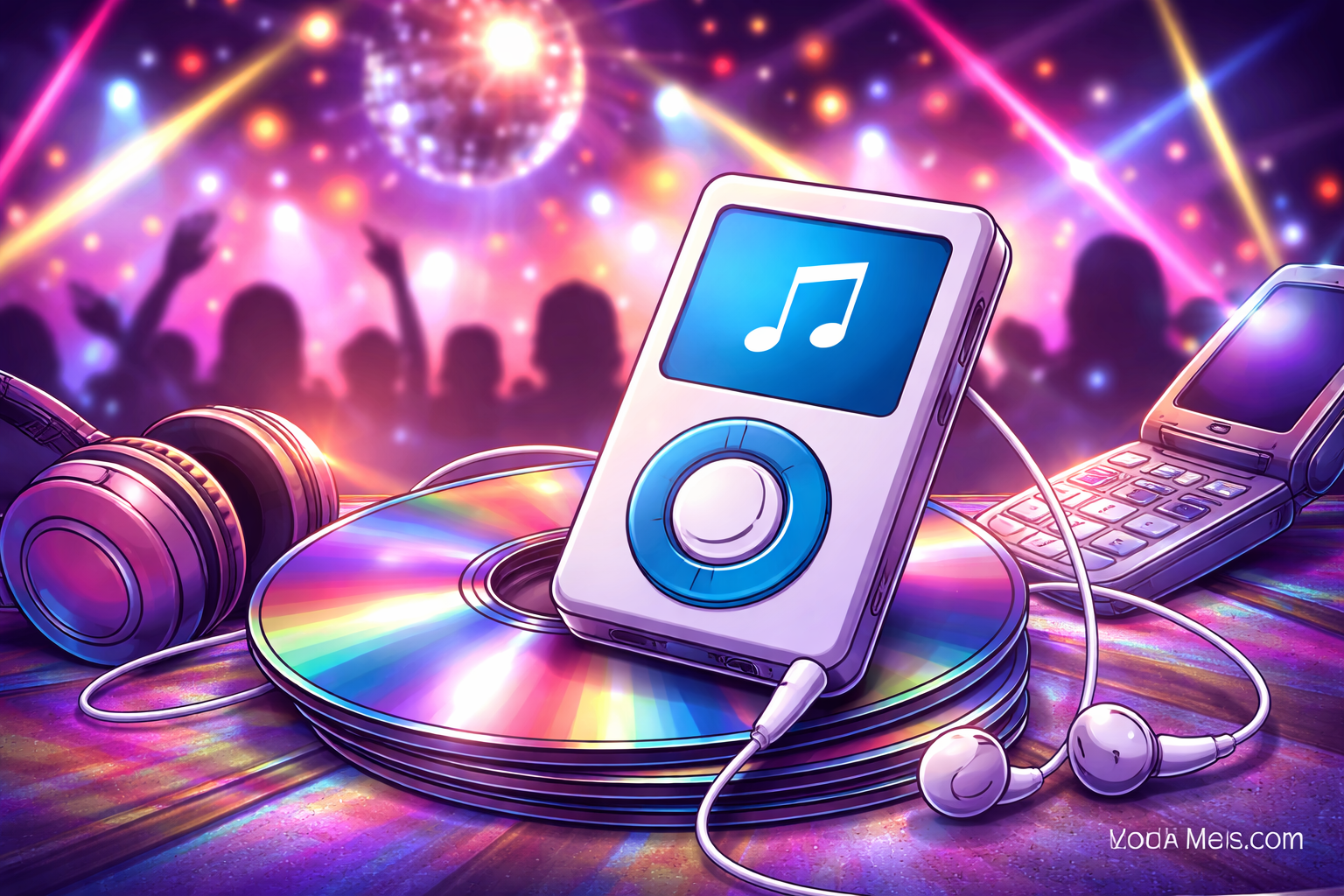
What began as a simple guessing game quietly evolved into something more intimate. Heardle 00s did not simply ask players to identify songs from the 2000s. It asked them to remember who they were when those songs first played through bedroom speakers, burned CDs, flip phones, or early iPods.
In many ways, Heardle 00s has lived a life of its own. It was born from a broader digital trend, survived the shutdown of its corporate parent, and found new energy in community-driven versions. Like the music it celebrates, it refuses to disappear.
Origins: From Wordle to a Musical Experiment
Heardle’s story begins in the shadow of another cultural phenomenon. Wordle proved that a simple daily puzzle could become a ritual shared by millions. Inspired by that success, Heardle replaced letters with music. Instead of guessing a word in six tries, players guessed a song from increasingly longer audio snippets.
The concept was elegant. The first second of a track would play. If the player could not identify it, they unlocked more of the intro. With each additional attempt, the song revealed itself.
The twist was subtle but powerful. Unlike trivia games that test lyrics or artist names, Heardle tested instinct. It measured how deeply music had embedded itself in memory.
When Spotify acquired Heardle, the game seemed destined for a long corporate future. Yet in 2023, Spotify shut it down as part of a shift in strategic priorities. Many assumed that would be the end.
It wasn’t.
From that closure came reinvention. Independent developers and fan communities rebuilt the format. Among the most beloved variations was Heardle 00s, a version dedicated entirely to songs from the 2000s. It narrowed the field, sharpened the nostalgia, and strengthened the emotional pull.
The 2000s: A Decade That Refuses to Fade
To understand Heardle 00s, one must understand the decade it celebrates.
The 2000s were transitional. They bridged the analog and digital eras. Teenagers burned CDs while simultaneously downloading MP3s. MTV still mattered, yet YouTube was rising. iTunes changed ownership of music, while MySpace reshaped how artists built audiences.
Musically, the decade was fearless. Pop collided with hip-hop. Emo bands shared space with glossy R&B. Electronic dance music crept into mainstream charts. Producers like Timbaland and The Neptunes created sonic signatures so distinct that a drum pattern alone could identify an era.
These details matter because Heardle 00s depends on them. The game thrives on recognizable intros. A piano chord, a snare snap, a synth swell. The 2000s delivered those moments in abundance.
The Psychology of Recognition
Heardle 00s is not just a guessing game. It is a study in cognitive recall.
Psychologists have long observed that people form particularly strong attachments to music heard during adolescence and early adulthood. Those years shape identity. Songs from that time become emotional anchors.
When a player hears the opening seconds of a 2004 hit, the brain does more than identify rhythm or melody. It reconstructs context. It recalls classrooms, road trips, friendships, heartbreaks, and first freedoms.
That is why Heardle 00s feels addictive. It compresses memory retrieval into seconds. It turns nostalgia into a daily ritual.
The pleasure does not come only from winning. It comes from remembering.
Reinvention: Life After the Shutdown
When Spotify ended its official version of Heardle, the format could have vanished. Instead, it fragmented into specialized editions.
Heardle 00s emerged as one of the most enduring variations. By focusing solely on the 2000s, it solved a subtle problem. General music trivia can overwhelm. Decade-specific gameplay creates familiarity.
Players no longer sift through half a century of hits. They move within a defined cultural landscape. The sound palette narrows. The guesses sharpen. The experience feels personal.
In that reinvention lies a lesson about digital culture. Platforms may control distribution, but communities control passion. When a format resonates deeply enough, it finds new life.
A Daily Habit in the Streaming Age
Streaming has given listeners access to nearly every recorded song ever released. Paradoxically, that abundance can dilute focus.
Heardle 00s cuts through the noise. It asks for attention.
Instead of passively streaming playlists, players lean in. They listen carefully to production details. They compare mental archives. They hesitate, reconsider, and commit to a guess.
In a world of background audio, the game restores active listening.
Moreover, it transforms solitary memory into shared conversation. Players compare scores. They debate difficulty. They post reactions online. What begins as a private recall becomes communal storytelling.
The Cultural Texture of the Game
Heardle 00s works best when it reflects the diversity of its decade.
The early 2000s shimmered with polished pop and glossy R&B. Mid-decade saw the rise of emo and pop-punk, soundtracking suburban adolescence. By the late 2000s, electro-pop and dance anthems dominated charts.
Each sub-era carries its own aesthetic fingerprint.
A strong round of Heardle 00s might feature a chart-topping single one day and a cult favorite the next. This variety keeps the experience unpredictable. It also mirrors how the 2000s felt in real time: chaotic, experimental, and endlessly cross-genre.
Why It Feels Personal
There is something uniquely intimate about recognizing a song from its first beat.
It feels like proof of belonging. It suggests that the music did not simply pass through your ears. It stayed.
Heardle 00s taps into that sense of ownership. When you guess correctly on the first second, you feel a flash of pride. When you miss, you feel surprised at your own forgetting.
Either way, the game reinforces connection.
For many players now in their thirties and forties, the 2000s represent formative years. For younger listeners, the decade has become retro-chic, rediscovered through streaming algorithms and social media trends. Heardle 00s bridges both audiences.
It creates a space where memory and rediscovery coexist.
Beyond a Game: A Cultural Marker
In hindsight, Heardle 00s may be remembered as more than a niche puzzle. It reflects how audiences engage with culture in the mid-2020s.
People crave compact, meaningful rituals. They want experiences that feel personal yet shareable. They seek nostalgia not as escape, but as grounding.
Heardle 00s meets those needs with remarkable efficiency. In under a minute, it delivers challenge, recognition, and emotion.
Few digital products manage that balance.
The Legacy of Heardle 00s
Like many internet-born phenomena, Heardle 00s exists partly in flux. Versions evolve. Platforms change. Developers adapt.
Yet its core idea remains stable. Play a second of sound. Invite memory to respond.
As long as the 2000s continue to hold emotional power, the game will resonate. And that power shows little sign of fading. Fashion cycles revisit Y2K aesthetics. Film and television repackage early-2000s soundtracks. Streaming services surface decade-specific playlists daily.
Heardle 00s stands comfortably within that revival, both reflecting and reinforcing it.
Read Also: Sophy Ridge Net Worth & Career Earnings
Conclusion
Heardle 00s began as a variation of a guessing game, but it matured into something closer to a biography of a generation. Each round tells a small story. Each intro revives a memory. Each correct guess affirms a shared cultural moment.
In an era defined by endless content and shrinking attention spans, its simplicity feels almost radical. No complicated interface. No sprawling leaderboard. Just a song, a second, and the question: do you remember?
For millions who grew up in the 2000s, the answer is often yes. And in that yes lies the quiet brilliance of Heardle 00s — a game that transformed nostalgia into ritual and memory into play.