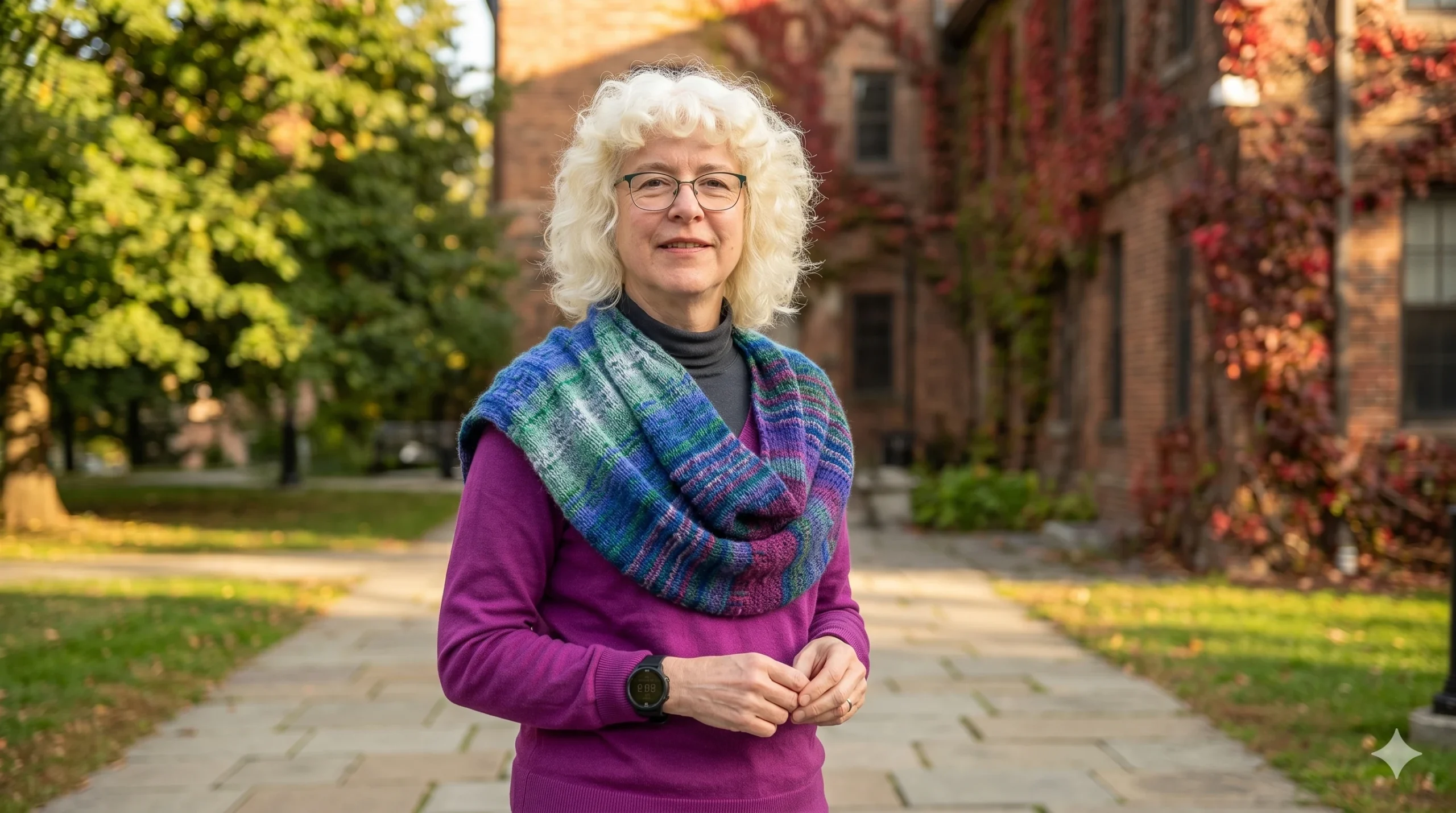
Jo McCubbin is not the kind of public figure whose life can be neatly reduced to fame, family, or a single career title. The best-documented Jo McCubbin is Dr Jo McCubbin, also listed professionally as Dr Joanna McCubbin, a paediatrician based in Sale, Victoria, whose work has stretched across children’s medicine, regional health, environmental advocacy, and local politics. Her public record is unusually grounded: a doctor treating children in Gippsland, a community advocate arguing about toxic waste and air pollution, and a climate-health voice long before that connection became common language.
Her name also appears in a different stream of online interest, often tied to British wildlife presenter Megan McCubbin and broadcaster Chris Packham. That material is far less stable, and many search-driven biographies appear to blend separate records without enough proof. A careful biography of Jo McCubbin has to begin there, with what can be verified and what should be treated cautiously. The result is a portrait of a woman whose real public importance lies less in celebrity proximity than in decades of work at the meeting point of child health, environment, and community responsibility.
Who Is Jo McCubbin?
Dr Jo McCubbin is a senior paediatrician associated with Fitzpatrick House in Sale, a regional specialist medical centre serving Gippsland in south-east Victoria. Fitzpatrick House describes her as well known throughout Gippsland and says she provides general paediatric services, with recent work focused on children with autism and behavioural problems. The practice also states that she provides outreach paediatric services to Orbost, Lakes Entrance, and Bairnsdale, which places her work across a large rural and regional area rather than one city clinic.
Medical directories list her under the fuller name Dr Joanna McCubbin. HealthShare identifies Dr Joanna McCubbin as a paediatrician in Sale, and Healthpages records Dr Joanna Patricia McCubbin as a registered paediatrician with an MBBS from the University of Melbourne in 1979. These listings are spare, but they help fix the professional record around a real doctor, a real region, and a real field of practice. +1
The clearest first-person statement comes from a public health submission in which Dr J McCubbin wrote that she was a paediatrician and had worked in Sale and East Gippsland since 1992. That date matters because it shows a career rooted in one region over decades, not a passing association with Gippsland. It also explains why her public comments often carry the weight of someone who has seen local health questions repeat in different forms over time.
Early Life and Education
Publicly available information about Jo McCubbin’s early life is limited, and that limit should be respected. Her birth date, parents, childhood home, and school history are not clearly established in reliable open sources. Biography pages sometimes fill those gaps with soft claims about values, family influence, or childhood interests, but those details are not useful unless they can be checked.
What can be verified is her medical qualification. Healthpages lists Dr Joanna Patricia McCubbin’s qualification as MBBS, University of Melbourne, 1979. In Australia, that credential marked the beginning of a path through medical training and later specialist practice, though the public record does not provide every step of her postgraduate route.
Her later professional designation, MBBS FRACP, appears on the Fitzpatrick House profile. FRACP refers to Fellowship of the Royal Australasian College of Physicians, a specialist credential held by physicians, including paediatricians, in Australia and New Zealand. The public record does not show a dramatic origin story, but it does show a doctor who built a long specialist career and remained tied to regional communities.
Building a Career in Regional Paediatrics
By the early 1990s, McCubbin had established herself in Sale and East Gippsland. Her work belongs to a demanding branch of medicine because paediatrics in regional Australia often asks doctors to cover distance, workforce gaps, family stress, and uneven access to specialist services. A child in Gippsland may need the same expert care as a child in Melbourne, but the pathway to that care can be far harder for parents to manage.
Fitzpatrick House describes her current or recent practice as general paediatrics with a focus on autism and behavioural problems. That area of medicine is often slow, careful, and relationship-based, because developmental concerns rarely resolve in one appointment. Families need assessment, explanation, coordination, school support, allied health referrals, and sometimes years of follow-up as a child grows.
Her outreach work also matters. Providing services to Orbost, Lakes Entrance, and Bairnsdale means practising in communities where families may otherwise face long travel times for specialist care. In that setting, a paediatrician is not only a clinician but also part of a fragile regional health network.
The Sale Hospital Dispute
One of the sharper public moments in McCubbin’s medical career came in 2006, when ABC News reported that Dr Jo McCubbin and Dr Peter Goss had resigned from Sale Hospital. Gippsland East MP Craig Ingram described the loss of the two paediatricians as a tragedy, a word that captured local concern about specialist services in the area. The report showed how quickly a staffing dispute could become a public issue when a regional hospital had limited paediatric cover.
ABC later reported that the two paediatricians said their eviction from rooms by Central Gippsland Health Service would discourage new specialists from working in the area. The dispute was not only about office space or professional disagreement. For the community, it raised a larger question about whether regional hospitals could retain specialists and maintain trust with the doctors they depended on.
That episode did not define McCubbin’s whole career, but it revealed a recurring theme in her public life. She has often appeared at points where systems meet families: hospitals, environmental regulators, waste authorities, mining projects, and public health warnings. Her role has been to say that decisions made in boardrooms or government offices eventually land in children’s lives.
Environmental Advocacy and WRATH
McCubbin’s public advocacy became especially visible through Wellington Residents Against Toxic Hazards, known as WRATH. In 2003, ABC News identified her as the group’s president when it withdrew from the Dutson Downs advisory committee. McCubbin said there was a basic difference between how WRATH and Gippsland Water viewed the committee’s purpose, especially over whether broader toxic waste concerns could be properly discussed.
Her later health submission on the Fingerboards mineral sands project gives more background to that period. She wrote that she had spent several years in the early 2000s as president of WRATH, fighting plans to turn Dutson Downs into a toxic and radioactive waste dump. The submission is advocacy material, not a neutral biography, but it offers direct evidence of how she understood her own public role.
That role was rooted in environmental health rather than abstract politics. For McCubbin, waste disposal, radiation, air quality, and water quality were not distant technical matters. They were questions about what communities are asked to live beside, what children might be exposed to, and whether authorities give residents enough credible information.
Climate Change as a Child Health Issue
In 2009, ABC News reported that Sale paediatrician Dr Jo McCubbin had been chosen from about 2,000 Australians to join Al Gore’s climate project summit in Melbourne. She was described as a trained presenter for the former United States vice-president’s climate change campaign. At the time, climate advocacy in regional Australia could still be treated as marginal or divisive, which makes her early public involvement more telling.
A follow-up ABC report said McCubbin returned from the Safe Climate seminar more optimistic about the possibility of global emissions reductions. She was one of 300 people involved in the Melbourne meeting before the Copenhagen climate summit. Her comments showed a practical kind of hope, not a naive one, because she knew public belief did not always translate into action.
ABC Listen later identified Dr Jo McCubbin as a paediatrician and board member of the Climate and Health Alliance. That affiliation fits the rest of her record because it places climate change inside a health frame, where heat, smoke, pollution, food security, and mental strain affect real patients. For a paediatrician, the central concern is especially clear: children inherit the consequences of decisions adults delay.
Air Pollution, Smoke, and Public Warnings
Air quality became another recurring issue in McCubbin’s advocacy. In 2013, ABC News reported that Gippsland paediatrician Jo McCubbin said there had not been enough information from the Environment Protection Authority or the Department of Health during planned burns. She called for more air quality warnings and closer monitoring of conditions.
Two years later, ABC reported that she urged the EPA to send text-message alerts during high pollution events. Her concern followed poor air quality readings in Traralgon and Morwell East, and she argued that delayed warnings could arrive too late for people who needed to protect themselves. The report said she singled out pregnant women and children as groups at particular risk from smoke exposure.
The strength of that position lies in its practicality. McCubbin was not only saying smoke is harmful, a point already supported by public health science. She was asking how warnings reach people in time, especially those who may not be watching for formal media releases during fast-moving pollution events.
The Hazelwood Context
McCubbin’s environmental health work sits in the shadow of the 2014 Hazelwood coal mine fire, one of the major pollution events in Victoria’s recent history. Her Fingerboards health submission says she was involved with the Hazelwood Health Study Clinical Advisory Committee and the Latrobe Valley air quality monitoring co-design process. Those references place her near public efforts to understand and respond to the health effects of smoke exposure in the region.
ABC reported in 2024 that research into babies exposed to smoke from the Hazelwood mine fire was helping fill knowledge gaps about air pollution and extreme smoke episodes. That article was not a profile of McCubbin, but it shows why the questions she had been raising mattered. Communities affected by smoke need more than reassurance; they need monitoring, timely communication, and research that can guide future decisions.
In McCubbin’s public record, Hazelwood is part of a broader pattern rather than a single issue. She has treated environmental exposure as a health story with delayed consequences, disputed evidence, and unequal burdens. That is why her voice often appears where medicine, regulation, and community trust collide.
Politics and Civic Work
The Australian Women’s Register records that Jo McCubbin stood as an Australian Democrats candidate for the Legislative Council Province of Gippsland at the Victorian state election held on 18 September 1999. It says she stood again at the 2002 election, held on 30 November 2002. In 2006, she ran as an Independent in the Legislative Assembly seat of South Gippsland.
That electoral history helps explain why McCubbin’s advocacy has not been limited to specialist reports or medical rooms. She has been willing to enter public debate directly, with all the exposure and frustration that brings. Running for office also suggests that her concerns about health, environment, and regional services were connected to broader questions of representation.
The same register records other forms of civic work. It identifies her as a founding member of the Gippsland Women’s Network, a member of the Project Management Committee of the East Gippsland Arts Network, and a member of Doctors for the Environment. Together, those roles show someone whose public service moved across medicine, women’s networks, arts, environment, and politics rather than staying inside one professional lane.
Family, Privacy, and the Megan McCubbin Question
A large share of online interest in Jo McCubbin comes from searches about Megan McCubbin, the British zoologist, conservationist, and television presenter often seen with Chris Packham. Many websites identify Megan’s mother as Jo McCubbin and describe her as a nurse and former partner of Packham. The difficulty is that many of those pages are thinly sourced, repeat one another, and sometimes merge that family story with the Australian paediatrician’s public record.
The safest approach is to keep the claims separate unless stronger evidence connects them. There is reliable documentation for Dr Jo McCubbin as an Australian paediatrician and environmental health advocate in Gippsland. There are also public references that identify Megan McCubbin’s mother as Jo McCubbin, but they do not justify importing every detail of the Australian doctor’s career into Megan’s family biography.
This distinction is not pedantic. Private people often become search subjects because they are related to public figures, and the internet then rewards speed over care. A respectful biography should not turn uncertain family claims into settled fact, especially when the person in question has not built a public persona around that relationship.
Marriage, Children, and Personal Life
McCubbin’s confirmed personal life is not widely documented in reliable public sources. There is no strong open-source basis for a detailed account of her marriage history, children, household, or private relationships. That absence should not be treated as a gap to fill with guesswork.
The public record does identify some family and ancestry context. The Australian Women’s Register states that Jo McCubbin is a descendant of Australian artist Frederick McCubbin. ABC Listen has also connected Jo and Darren McCubbin to discussion of Frederick McCubbin’s painting “Down on His Luck” in relation to climate protest and Woodside Energy. +1
That artistic connection is interesting, but it should not overshadow her own work. Famous ancestry can make a name more searchable, yet McCubbin’s public identity is better understood through medicine and advocacy. Her career shows a woman who made her mark through local service rather than inherited cultural standing.
Net Worth and Income Sources
There is no credible public estimate of Jo McCubbin’s net worth. Some biography websites include wealth-related language around people linked to public figures, but those claims are not useful without documents, financial disclosures, property records, or credible reporting. For McCubbin, the available evidence supports a discussion of income sources, not a dollar figure.
Her likely professional income has come from medical practice as a paediatrician, including specialist work in Sale and outreach services across Gippsland. She has also been publicly active in advocacy, politics, and community organizations, but there is no evidence that those activities formed major commercial ventures. Any precise net worth claim would be speculation.
This is one area where a careful profile should disappoint readers rather than mislead them. A false number may satisfy curiosity for a moment, but it damages the record. The honest answer is that McCubbin’s finances are private, and no reliable public source establishes her net worth.
Public Image and Reputation
McCubbin’s public image is built around seriousness, persistence, and local trust. She is not a celebrity doctor, a media personality, or a brand-driven public figure. She appears in the record most often because a community issue has crossed into health, and she has chosen to speak about it.
That reputation is not without friction. Environmental health advocacy often brings doctors into conflict with agencies, industry bodies, and political actors who prefer narrower definitions of risk. McCubbin’s record includes disputes over toxic waste, hospital services, planned burns, air quality alerts, and mining proposals, which means she has not always occupied comfortable public ground.
Yet the consistency of her focus is striking. Whether the subject is autism care, regional paediatric access, smoke warnings, or climate change, her public position usually returns to the same concern: children and communities need systems that protect them before harm becomes visible. That is a demanding standard, but it is also a deeply medical one.
Where Jo McCubbin Is Now
As of the latest available public listings, Dr Jo McCubbin remains associated with Fitzpatrick House in Sale. The practice profile lists her as a senior paediatrician providing general paediatric services and outreach care to other Gippsland communities. HealthShare and other medical directories also continue to identify Dr Joanna McCubbin as a paediatrician in Sale. +1
Her current public status appears quieter than the periods when ABC News covered her comments on hospital services, climate training, toxic hazards, and air quality warnings. That does not mean the work has stopped; regional specialists often have lives of service that far exceed their public visibility. It means only that the most reliable current record places her in medical practice rather than in a new national spotlight.
The broader significance of her career remains current because the issues she raised have not gone away. Rural health access, developmental paediatrics, air pollution, smoke events, climate risk, and community consent around industrial projects are still pressing questions in Australia. McCubbin’s biography matters because it shows how one regional doctor connected those issues long before many institutions learned to speak about them together.
Frequently Asked Questions
Who is Jo McCubbin?
Jo McCubbin most reliably refers to Dr Jo McCubbin, also listed as Dr Joanna McCubbin, a paediatrician based in Sale, Victoria, Australia. She is known for her work in regional child health, autism and behavioural paediatrics, outreach medical services, environmental health advocacy, and community campaigns in Gippsland. Her public record is strongest in Australian medical, civic, and environmental contexts.
Is Jo McCubbin a paediatrician?
Yes, Dr Jo McCubbin is publicly listed as a senior paediatrician at Fitzpatrick House in Sale. The practice says she provides general paediatric services and has focused in recent years on children with autism and behavioural problems. Medical directories also list Dr Joanna McCubbin as a paediatrician in Sale, Victoria. +1
What is Jo McCubbin known for?
She is known for regional paediatric work in Gippsland and for environmental health advocacy. Her public record includes involvement in toxic waste concerns at Dutson Downs, climate change education linked to Al Gore’s Climate Project, calls for better air pollution warnings, and submissions on mining-related health risks. She has also stood for election in Victoria and worked with community networks. +2ABC News+2
Is Jo McCubbin Megan McCubbin’s mother?
Many online sources identify Megan McCubbin’s mother as Jo McCubbin, but those claims are often not supported with strong primary sourcing. The bigger problem is that some websites appear to merge Megan McCubbin’s family story with the Australian paediatrician’s career without proving they are the same person. A careful reading should treat those strands separately unless better evidence becomes available.
What is Jo McCubbin’s net worth?
There is no reliable public net worth estimate for Jo McCubbin. Her known income source is her medical career as a paediatrician, but private financial details are not publicly established. Any exact figure found on low-quality biography sites should be treated with caution unless it is supported by credible documents or reporting.
Is Jo McCubbin related to Frederick McCubbin?
The Australian Women’s Register states that Jo McCubbin is a descendant of Frederick McCubbin, the Australian artist associated with the Heidelberg School. That connection has appeared in public discussion of climate protest and Australian art. Still, her own public record rests mainly on medicine, environmental health, and civic work. +1
Where is Jo McCubbin now?
Current public listings place Dr Jo McCubbin at Fitzpatrick House in Sale, Victoria. The practice describes her as a senior paediatrician serving Gippsland and providing outreach services to Orbost, Lakes Entrance, and Bairnsdale. There is no reliable evidence that she has moved into a celebrity-facing role or a public life outside the medical and advocacy record already documented.
Read also: Joan Anderton: Life, Marriage, and Public Profile
Conclusion
Jo McCubbin’s life, as the reliable record shows it, is not a story of sudden fame. It is a story of long service in a region where specialist doctors matter deeply and where public health questions often become local fights. Her biography is grounded in paediatrics, but it reaches into environmental risk, climate change, rural health systems, and the responsibilities institutions owe to families.
The most revealing part of her public record is its consistency. Whether she was speaking about toxic waste, hospital paediatric services, smoke warnings, or climate change, McCubbin kept returning to the health of children and communities. That steady focus gives her career a shape that is clearer than the scattered online biographies built around her name.
There are things about Jo McCubbin that remain private, and they should remain so unless she or reliable records place them in public view. What is already public is enough to show a serious life of professional care and civic conviction. In an online culture that often mistakes visibility for importance, her story is a reminder that influence can be regional, persistent, and deeply practical.