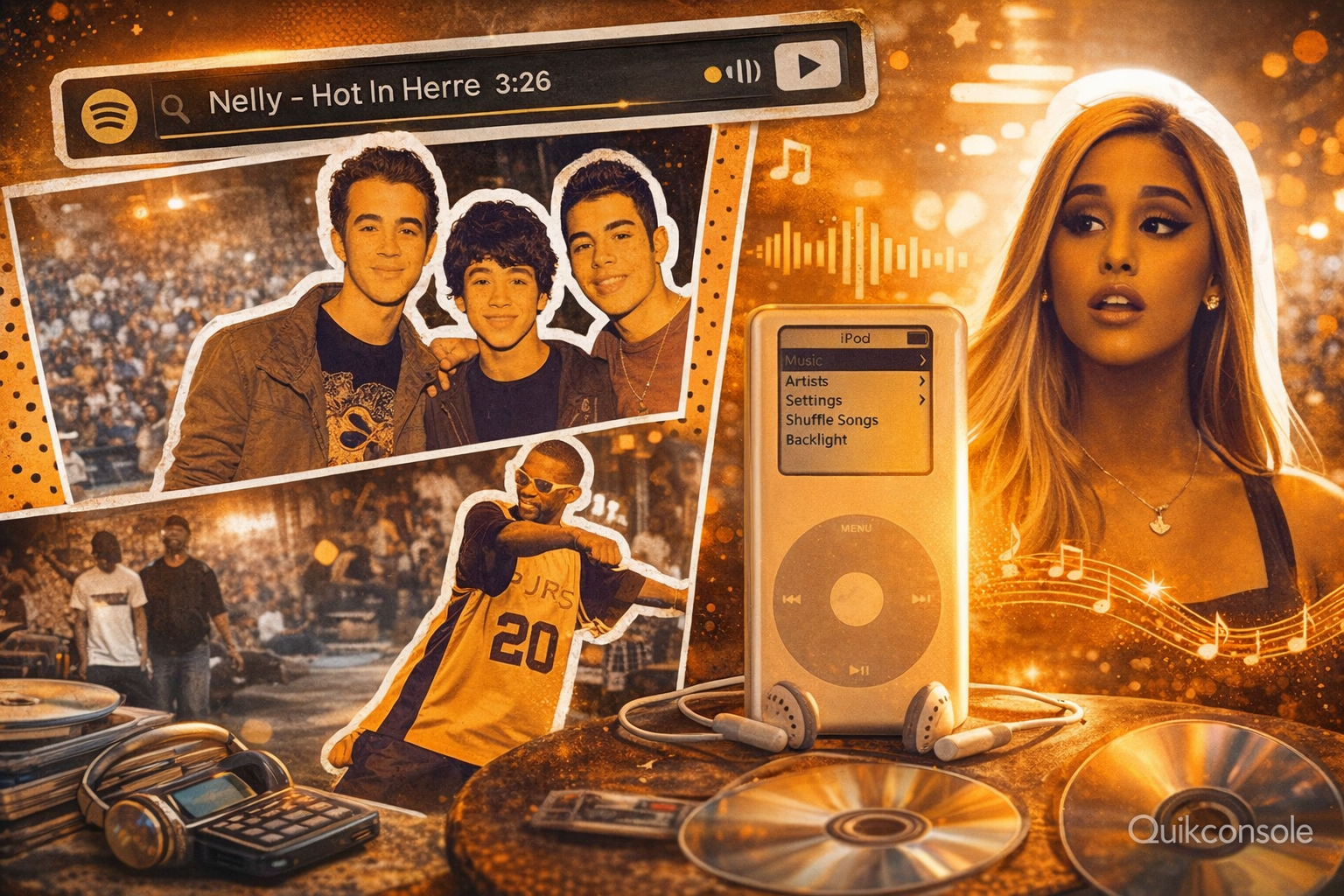
There are some cultural moments that don’t simply entertain us; they define an era. Heardle 2000s feels like one of those moments, even though it exists entirely online. It is not a celebrity, not a singer, not even a person. Yet if it had a biography, it would read like the story of a child born from memory, raised by the internet, and matured by a generation that refuses to let its soundtrack fade away.
Heardle 2000s did not arrive with fireworks. It appeared quietly, like a familiar melody playing from another room. At its core, it is simple: a short clip of a song’s intro plays, and you must guess the track. If you fail, you hear a little more. And then a little more. What seems like a small digital challenge quickly becomes a deeply personal encounter with the past.
To understand Heardle 2000s is to understand the people who play it.
The Birth of a Digital Memory Machine
The original Heardle concept emerged during the rise of daily puzzle culture. Word games had already proven that short, repeatable challenges could command massive attention. Heardle applied that same logic to music. But when the 2000s edition began circulating, something changed. It was no longer just a game. It became a portal.
The 2000s were a turning point in music history. It was the bridge between physical CDs and digital downloads. Between MTV countdowns and YouTube streams. Between flip phones and smartphones. Songs from that decade carry a specific emotional weight because they accompanied people through adolescence, early adulthood, and the chaotic birth of social media.
Heardle 2000s stepped into that emotional space with perfect timing. Each one-second intro felt like unlocking a time capsule.
Growing Up in the Age of Ringtones and Burned CDs
If Heardle 2000s were a person, its childhood would be loud and eclectic. It would have grown up listening to pop anthems blasting from car stereos, emo ballads shared through instant messenger, hip-hop tracks downloaded illegally at 2 a.m., and dance hits that defined early club culture.
The decade itself was fearless in sound. Producers built bold intros designed to grab attention immediately. Radio still dominated discovery, so songs had to hook listeners fast. That urgency now serves Heardle perfectly. Many 2000s tracks can be identified within a heartbeat because their openings were engineered to be unmistakable.
The heavy piano chords of a power ballad. The crisp snap of a signature drum beat. The distorted guitar riff that once filled arenas. These are not just sounds. They are fingerprints.
A Game That Feels Personal
What makes Heardle 2000s different from other trivia formats is how intimate it feels. When you hear a track and instantly recognize it, the reaction is visceral. You are not simply identifying a song. You are remembering where you were when you first heard it.
Maybe it was playing during your first heartbreak. Maybe it was blasting through cheap headphones while you stared out of a bus window. Maybe it was the soundtrack to a school dance, awkward and unforgettable.
Heardle 2000s thrives on recognition before recall. You know the melody immediately, but the title escapes you for a few tense seconds. That gap between certainty and memory is the heart of the game. It mirrors how our brains store music: emotionally first, logically second.
The Spotify Chapter and the Reinvention
Like many digital trends, Heardle experienced a turning point when major platforms noticed its popularity. Spotify acquired the original version in 2022, integrating it into its ecosystem. For a moment, it seemed as though the game would evolve into a fully polished streaming companion.
Yet in 2023, Spotify discontinued Heardle. Some thought the story had ended there. Instead, that decision became a rebirth.
Independent versions, including Heardle 2000s, flourished. The format was too simple and too beloved to disappear. Fans rebuilt it. Developers refined it. The community kept playing. In a strange way, the shutdown strengthened its identity. It was no longer a corporate feature. It became a cultural ritual.
Why the 2000s Refuse to Fade
Every decade cycles back into relevance, but the 2000s have proven unusually resilient. Fashion trends have returned. Pop-punk tours sell out again. Streaming playlists dedicated to early 2000s hits attract millions of listeners.
The reason lies in timing. The generation that grew up during that era now holds significant cultural and economic influence. They curate playlists, create viral videos, and shape media conversations. At the same time, younger listeners discover 2000s music through short-form video platforms, often encountering older songs as if they were new releases.
Heardle 2000s sits at the intersection of those two audiences. For one group, it is nostalgia. For another, it is discovery.
The Psychology Behind the Obsession
Heardle 2000s may look like a casual distraction, but its design taps into deep psychological triggers. Humans are wired to respond to incomplete information. When we hear a fragment of something familiar, our brains crave closure.
The game also leverages social comparison. Scores can be shared. Streaks can be protected. Pride is on the line. Yet the stakes remain low enough to feel safe. Losing does not hurt. It simply fuels tomorrow’s attempt.
Moreover, music is uniquely tied to memory formation. Studies in cognitive science have shown that songs associated with adolescence often remain especially vivid throughout adulthood. The 2000s fall precisely into that formative window for millions of players.
In that sense, Heardle 2000s is not random. It is neurologically strategic.
The Soundtrack of Identity
During the 2000s, identity was increasingly shaped online. MySpace profiles allowed users to choose theme songs. Early social networks encouraged self-expression through music taste. The songs you liked were not private; they were public declarations.
Heardle 2000s quietly revives that era of musical identity. When someone guesses a track in one second, they are signaling cultural literacy. They are saying, I was there. I remember.
Even disagreements become bonding moments. Was that intro by a pop superstar or a one-hit wonder? Was it 2003 or 2007? The debate itself becomes part of the ritual.
A Daily Ritual in a Fragmented World
Modern digital life is scattered. Attention spans are short. Trends change overnight. In that environment, daily rituals carry surprising power.
Heardle 2000s offers structure. One song per day. One shared experience. It does not demand hours. It asks for seconds. And in those seconds, it delivers a complete arc: suspense, recognition, satisfaction.
Many players incorporate it into morning routines, much like reading headlines or checking messages. It becomes a small anchor point in an otherwise chaotic feed.
This ritualistic aspect explains its endurance. Trends often fade because they require too much effort. Heardle requires almost none.
From Game to Cultural Artifact
If historians were to document the digital culture of the 2020s, Heardle 2000s would likely appear as a footnote. Yet it represents something larger: the gamification of nostalgia.
Streaming platforms transformed how we access music. Algorithms determine what resurfaces. Viral videos decide which tracks return to the charts. Heardle adds a layer of participation. Instead of passively hearing an old song, players actively retrieve it from memory.
That participation matters. It turns listening into engagement.
Furthermore, the 2000s were a transitional era technologically. They bridged analog and digital worlds. Heardle 2000s mirrors that bridge. It uses modern design to resurrect music born during a time when technology was still discovering its limits.
The Future of Heardle 2000s
Will Heardle 2000s still exist five years from now? Possibly. Its format is timeless. As long as people love music and competition, the concept remains viable.
However, its deeper legacy may not lie in longevity but in impact. It reminded millions that songs do not disappear when charts change. They wait quietly, stored in memory, ready to return with a single second of sound.
And perhaps that is its greatest achievement. It proved that nostalgia does not require grand reunions or expensive tours. Sometimes it needs only a drumbeat and a guess.
Raad Also :WordHippo 5 Letter Word Search Guide
Conclusion
Heardle 2000s is more than a guessing game. It is a biography of a decade told through intros and instincts. It captures how music shapes identity, how memory lingers in melody, and how digital culture continues to recycle and revive what once defined us.
Its life story reflects our own. Born from innovation, tested by corporate shifts, sustained by community passion, and powered by nostalgia, it stands as a small but meaningful symbol of how the internet preserves cultural memory.
When the first second of a 2000s song plays, something remarkable happens. We remember who we were. And for a brief moment, through a simple digital challenge, we feel connected to that version of ourselves again.